


On the occasion of the National Day against Peer Violence - Pink T-Shirt Day, on the last Wednesday of February, February 28, an education was held for students of the Dragutin Tadijanović Elementary School (2nd B grade) and the August Šenoa Elementary School - Pongračevo Branch School (1st B and 1st E grade).
The students learned about the Convention on the Rights of the Child, the Convention on Human Rights and the UN Convention on the Rights of Persons with Disabilities, they learned about the diversity of children with and without developmental disabilities, especially with muscular dystrophy (MD), and the forms of peer violence were presented to the students , the differences between violence and conflict, and they were presented with the "STOP peer violence" quiz. The students watched the SDDH's educational animated whiteboard video about tolerance of diversity and prevention of peer violence, which, through the story of Julija and Jan, outlines the problems of peer violence, the consequences it leaves behind, as well as ways of fighting and coping, and conveys a strong message that peer violence can be overcome by allied forces. stop. The education was carried out as part of the project "No to violence - yes to tolerance".
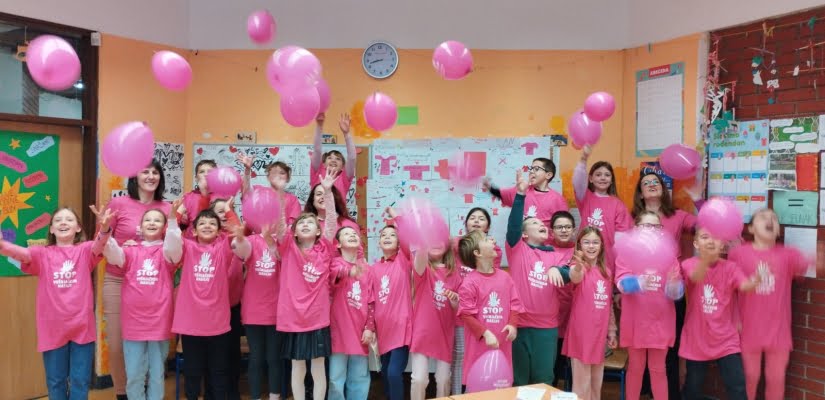
After the education, the children were discussed about Pink T-Shirt Day, the importance of marking that day, and the children were given pink T-shirts with a commemorative message and pink balloons, which were raised high in the air for a group photo while loudly proclaiming the message "Stop Peer Violence!".

The project "NO TO VIOLENCE - YES TO TOLERANCE" was financed from the budget of the City of Zagreb, and approved within the framework of the Public tender for financing programs and projects of associations in the field of social and humanitarian importance for improving the quality of life of persons with disabilities from the Budget of the City of Zagreb for 2023.
For many years, SDDH has been implementing numerous projects and programs in the field of preventing violence against and among children and young people, with the synergistic action of state and public institutions and civil society organizations.
